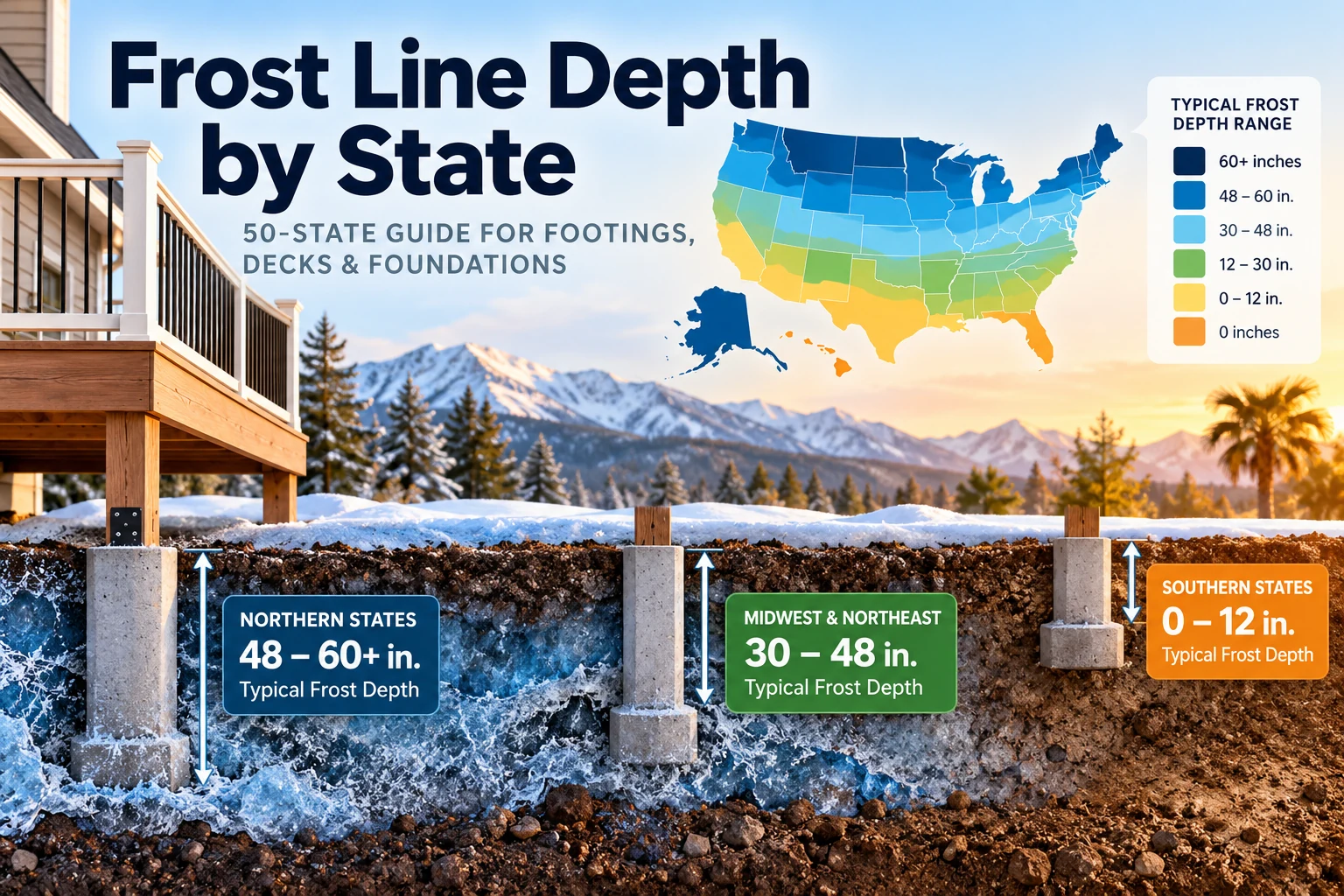
Frost line depth in the United States ranges from essentially 0 inches in warm southern climates to 60 inches or more in northern and high-elevation areas. There is no single official frost depth for an entire state. For rough planning, southern locations are often around 0–12 inches, transition climates around 12–30 inches, much of the Midwest and Northeast around 30–48 inches, and colder northern regions around 48–60+ inches. For actual construction, use the design frost depth published or required by the local building authority.
Frost Line Depth by State
The table below gives typical planning ranges for all 50 states. These numbers are useful for understanding likely excavation and footing depth, but they are not statewide permit requirements.
For an independent starting number before you compare local quotes, use the remodel cost calculator. Treat it as a planning range, then replace assumptions with project-specific bids and local requirements.
A single state can contain warm coastal areas, cold mountain communities and high-elevation locations with very different winter ground conditions.
| State | Typical Planning Range | What Changes Locally |
|---|---|---|
| Alabama | 6–12 in. | Frost is generally shallow, with colder conditions possible in northern Alabama. |
| Alaska | 42–120+ in. | Highly location-dependent. Permafrost and unheated structures can require specialized foundation design. |
| Arizona | 0–30+ in. | Desert areas may have little frost while high-elevation northern Arizona can freeze substantially deeper. |
| Arkansas | 12–18 in. | Northern and higher-elevation areas generally experience deeper frost. |
| California | 0–30+ in. | Coastal areas may have little frost while Sierra and mountain communities can require substantial depth. |
| Colorado | 30–48+ in. | Elevation matters significantly and mountain communities may require considerably deeper foundations. |
| Connecticut | 42–48 in. | Cold winters make frost protection an important footing consideration across the state. |
| Delaware | 18–24 in. | Local jurisdiction and proximity to the coast influence the design requirement. |
| Florida | 0 in. | Frost generally does not control foundation depth, but structural footing requirements still apply. |
| Georgia | 6–12 in. | Northern Georgia is generally colder than coastal and southern portions of the state. |
| Hawaii | 0 in. | Frost is generally not a foundation design concern in normal developed areas. |
| Idaho | 24–48+ in. | Northern Idaho and high elevations can be considerably deeper than warmer valley locations. |
| Illinois | 30–42 in. | Northern Illinois and the Chicago region are generally toward the deeper end of the range. |
| Indiana | 24–36 in. | Frost depth generally increases toward northern Indiana. |
| Iowa | 42–48 in. | Deep seasonal freezing makes frost protection important for permanent exterior supports. |
| Kansas | 24–36 in. | Northern and western locations can experience deeper winter freezing. |
| Kentucky | 12–24 in. | Northern Kentucky generally experiences deeper frost than southern areas. |
| Louisiana | 0–12 in. | Frost is usually minor and structural footing requirements often control depth. |
| Maine | 48–60+ in. | Maine contains some of the deeper frost conditions in the contiguous United States. |
| Maryland | 18–30 in. | Western Maryland can be significantly colder than the coastal plain. |
| Massachusetts | 36–48 in. | Western and inland locations can experience deeper frost than some coastal areas. |
| Michigan | 42–60 in. | Northern Michigan and the Upper Peninsula can require particularly deep frost protection. |
| Minnesota | 42–60+ in. | Northern Minnesota can experience very deep seasonal freezing. |
| Mississippi | 0–12 in. | Frost usually has a limited effect on foundation design. |
| Missouri | 18–36 in. | Conditions vary substantially between northern Missouri and the Bootheel. |
| Montana | 36–60+ in. | Elevation and severe continental climate create large regional differences. |
| Nebraska | 36–42 in. | Northern and western portions of the state may reach the deeper end of the range. |
| Nevada | 0–30+ in. | Las Vegas and southern Nevada differ dramatically from Reno and higher elevations. |
| New Hampshire | 48–60 in. | Deep frost protection is common throughout the state. |
| New Jersey | 24–36 in. | Northern New Jersey generally freezes deeper than coastal southern areas. |
| New Mexico | 12–30+ in. | High-elevation communities can experience much deeper frost than lower desert locations. |
| New York | 36–60 in. | New York City, western New York and the Adirondacks can have very different requirements. |
| North Carolina | 6–18 in. | Mountain counties can require deeper frost protection than Piedmont and coastal areas. |
| North Dakota | 48–60+ in. | North Dakota is one of the country’s deeper seasonal frost regions. |
| Ohio | 24–42 in. | Northern Ohio generally requires greater depth than southern Ohio. |
| Oklahoma | 12–24 in. | Northern Oklahoma and the Panhandle generally experience deeper freezing. |
| Oregon | 0–24+ in. | Coastal Oregon differs greatly from eastern Oregon and high-elevation areas. |
| Pennsylvania | 30–42 in. | Northern and higher-elevation areas can require greater depth. |
| Rhode Island | 36–42 in. | Frost protection is an important footing consideration throughout the state. |
| South Carolina | 6–12 in. | Frost is generally shallow, with the Upstate commonly colder than coastal regions. |
| South Dakota | 42–60 in. | Deep frost conditions occur across much of the state. |
| Tennessee | 12–24 in. | Higher elevations in eastern Tennessee can require additional depth. |
| Texas | 0–12+ in. | Gulf Coast conditions differ significantly from colder northern and Panhandle locations. |
| Utah | 12–36+ in. | St. George, Salt Lake City, mountain valleys and alpine areas can have very different frost conditions. |
| Vermont | 48–60 in. | Deep seasonal freezing is typical across the state. |
| Virginia | 12–24 in. | Coastal Virginia is milder than northern, western and higher-elevation areas. |
| Washington | 0–24+ in. | Puget Sound is relatively mild while eastern Washington and mountain locations freeze deeper. |
| West Virginia | 24–36 in. | Higher elevations generally require greater frost protection. |
| Wisconsin | 42–60 in. | Northern Wisconsin can experience substantially deeper frost than southern areas. |
| Wyoming | 36–60+ in. | High elevation and severe winter conditions can produce deep frost penetration. |
What Is the Frost Line?
The frost line, also called frost depth, freeze depth or frost penetration depth, is the depth to which the ground can freeze during cold weather.
It matters because moisture in frost-susceptible soil can freeze and contribute to upward ground movement known as frost heave. A structural support sitting inside this seasonally freezing zone can move upward during winter and settle again as the ground thaws.
- Deck piers can rise or tilt.
- Fence posts can lean or work upward.
- Exterior stairs and porches can shift.
- Concrete and masonry can crack.
- Additions can move differently from the existing house.
How Deep Do Footings Need to Be?
Frost depth and minimum footing depth are related, but they are not the same number.
Where frost protection is required, permanent exterior supports generally need an approved frost-protection method. Extending the footing below the locally established frost line is one common approach.
Frost Depth for Deck Footings
Deck footings deserve particular attention because many decks rely on isolated piers rather than a continuous foundation. In frost-prone locations, a shallow pier can be lifted by freezing soil while the house remains relatively stable.
Before pouring deck footings, verify:
- The locally required frost depth.
- Minimum footing width or diameter.
- Allowable soil-bearing capacity.
- Required concrete thickness.
- Post-to-footing connection details.
- Whether inspection is required before concrete placement.
What About Fence Posts?
Typical residential fences are not always regulated in the same way as building foundations, but frost heave can still affect them. In cold climates, shallow posts can gradually move upward or lean after repeated freeze-thaw cycles.
Depth matters
Deeper posts can reduce seasonal movement where the ground freezes substantially.
But depth is not everything
Fence height, wind exposure, post material, soil type, drainage and hole diameter also affect stability.
Why Frost Depth Changes So Much Within One State
Elevation
Higher elevations generally experience colder conditions and longer freezing periods. This creates major differences within states such as Colorado, California, Arizona, Utah, Nevada and New Mexico.
Latitude
Northern locations generally experience longer and colder winters, although latitude alone cannot determine design frost depth.
Snow Cover
Snow can insulate the ground. A consistently snow-covered site can behave differently from exposed ground experiencing similar air temperatures.
Soil and Moisture
Frost heave is affected by more than temperature. Soil composition, available moisture and drainage influence how susceptible the ground is to freeze-related movement.
Local Climate
Large bodies of water, mountains, valleys, urban development and regional weather patterns can all affect winter temperatures and ground freezing.
Design Frost Depth vs. Current Frost Depth
| Term | What It Means | How It Is Used |
|---|---|---|
| Design frost depth | A planning or code value representing the frost condition used for foundation design. | Permanent foundations, piers, footings and code review. |
| Current frost depth | How deeply the ground is frozen at a particular time during a particular winter. | Seasonal conditions, excavation and weather monitoring. |
A permanent footing is not redesigned every winter according to that season’s measured frost depth. Construction uses the applicable design criteria adopted for the site.
How to Find the Exact Frost Line for Your Property
-
Find the authority that issues the permit.
Depending on the property, that may be a city, county, township, borough or regional building authority. -
Search its residential design criteria.
Look for terms such as frost depth, frost line, minimum footing depth, climatic design criteria or IRC Table R301.2. -
Check the adopted code edition.
Jurisdictions do not all adopt model codes at the same time and local amendments can modify the base requirements. -
Confirm the project type.
Requirements can differ for house foundations, additions, attached decks, detached decks, garages, porches and accessory structures. -
Verify before excavation.
Confirm the required depth before ordering concrete or digging every footing.
Planning Example: A Deck in Pennsylvania
Suppose you are planning an attached deck in Pennsylvania. The statewide planning range in this guide is roughly 30 to 42 inches. That immediately tells you this is unlikely to be a shallow 12-inch footing project.
But it does not mean every Pennsylvania homeowner should automatically dig to 42 inches. Your local jurisdiction may specify a particular design frost depth, and footing width still depends on the load and soil-bearing conditions.
Verify Before You Build
Use these primary references to verify code, safety, energy, or contractor-planning details. Local rules, adopted code editions, manufacturer instructions, and project conditions still control.
Frost Line Depth FAQs
What is the frost line?
The frost line is the depth to which the ground can freeze during winter. Building departments use a design frost depth to help protect foundations and structural supports from freeze-related ground movement.
Is frost line depth the same everywhere in a state?
No. Elevation, latitude, soil, moisture, snow cover and regional climate can produce substantial differences within one state.
Do deck footings need to go below the frost line?
Deck footings commonly require frost protection and often extend below the locally established frost line. Verify the applicable local requirements before construction.
How deep should a footing be if there is no frost?
Little or no frost does not mean a structural footing can sit directly at ground level. Soil-bearing capacity, structural loads, erosion, uplift and locally adopted minimum footing requirements still apply.
Where do I find my exact frost depth?
Check the residential design criteria published by your city, county or other authority having jurisdiction. Frost depth is often listed with local climatic and geographic design criteria.