Roof Tear-Off vs. Adding Another Layer
Compare the price and deliverable for removal against a recover proposal. Verify the system, underlying condition and local rules before choosing an overlay.
What matters most
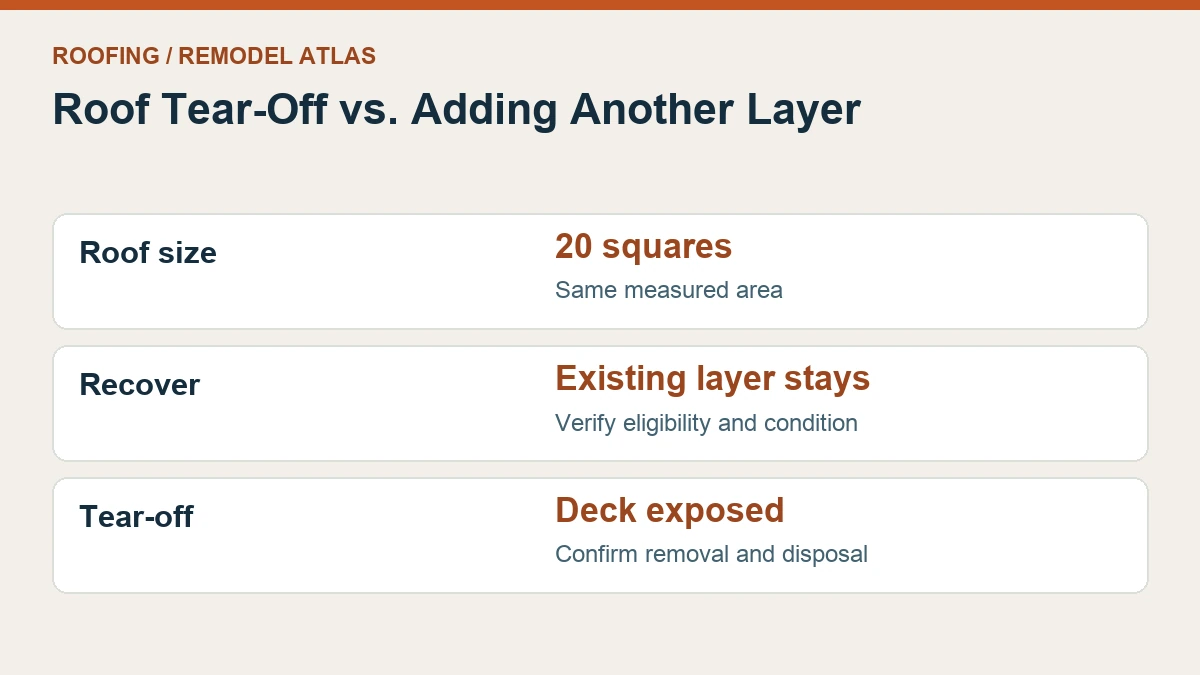
- Roof size — 20 squares (same measured area).
- Recover — Existing layer stays (verify eligibility and condition).
- Tear-off — Deck exposed (confirm removal and disposal).
Ask the roofer to identify what is already there
An overlay or recover retains existing material as part of the proposed assembly. A tear-off exposes the underlying deck for review. Have the contractor verify roofing layers, system type and visible conditions. The local authority and product instructions determine which options apply for your property.
Compare like areas and different tasks
Consider a 20-square roof. Quote A lists 20 squares of new covering and no old material removal. Quote B lists the same installed area and separately includes tear-off and disposal. A further extra-layer charge would be a third line against the amount actually found, so note the number of layers included in each base.
| Line item | Value | Basis |
|---|---|---|
| Roof size | 20 squares | Same measured area |
| Recover | Existing layer stays | Verify eligibility and condition |
| Tear-off | Deck exposed | Confirm removal and disposal |
Check transitions and the concealed deck
Ask how the bidder assesses deck condition if old roofing stays, and what is planned at eaves, valleys, vents and walls. Confirm which warranty applies to each assembly. If tear-off is included, use the deck repair allowance guide to agree on the price and documentation for additional openings or damaged sheets.
Tear-off and layer inspection worksheet
Get a print-ready planning worksheet by email. We use your name and email to fulfill your request, not to sign you up for marketing.
Put the proposed approach in writing
Record layer count, disposal, existing flashings, preparation and surfaces the contractor will see. Ask for a clear trigger that changes the scope after inspection. This makes the price gap intelligible before material is ordered.
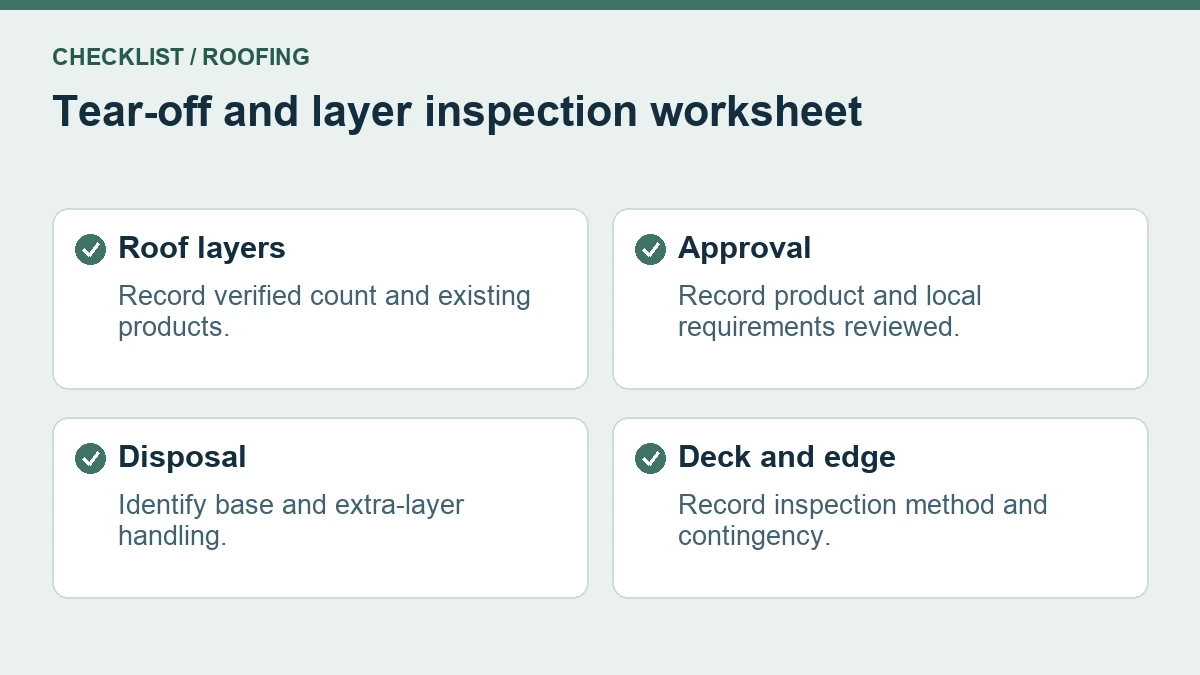
- Roof layers — Record verified count and existing products.
- Approval — Record product and local requirements reviewed.
- Disposal — Identify base and extra-layer handling.
- Deck and edge — Record inspection method and contingency.
Sources and scope notes
We distinguish published references from worked scenarios, which are not verified contractor bids. Review product instructions and local requirements for your own project.
- HomeGuide roof replacement costPublished replacement cost ranges by roof area and material.
- PNNL water-managed roof assemblyRoof assembly and water-management details.
- FTC home improvement hiring guidanceGuidance on written estimates, hiring and contracts.