How to Read ENERGY STAR and NFRC Window Labels
Compare U-factor and solar heat gain coefficient for the window actually being ordered, then check requirements for the address.
What matters most
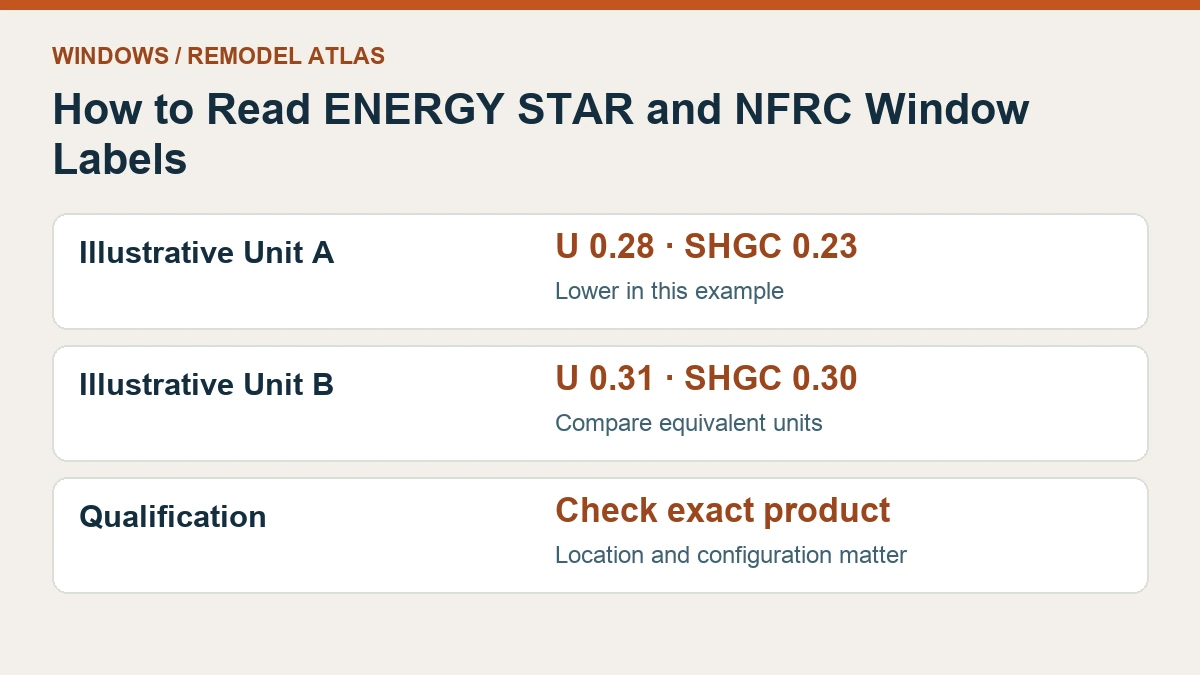
- Illustrative Unit A — U 0.28 · SHGC 0.23 (lower in this example).
- Illustrative Unit B — U 0.31 · SHGC 0.30 (compare equivalent units).
- Qualification — Check exact product (location and configuration matter).
Read both of the main performance values
U-factor measures how readily heat flows through the window assembly. A lower U-factor indicates less heat transfer. Solar heat gain coefficient, often shown as SHGC, represents how much solar heat enters through the product. A lower SHGC admits less solar heat.
ENERGY STAR residential windows · Product ratings and location-based certification guidance.
Compare documented ratings for two example products
Say two otherwise comparable quotes show U-factors of 0.28 and 0.31, with SHGC values of 0.23 and 0.30. The first has lower rated heat transfer and solar gain. Those example values do not estimate dollar savings and do not by themselves establish code compliance.
| Line item | Value | Basis |
|---|---|---|
| Illustrative Unit A | U 0.28 · SHGC 0.23 | Lower in this example |
| Illustrative Unit B | U 0.31 · SHGC 0.30 | Compare equivalent units |
| Qualification | Check exact product | Location and configuration matter |
Verify program eligibility by location and configuration
Check ENERGY STAR’s criteria for windows, doors and skylights in your climate zone. Ask the contractor to match the label to the exact frame and glazing chosen. For California jobs, use the California window planning guide to check where the state’s climate zones and requirements enter the discussion.
ENERGY STAR window criteria · Certification criteria for different climate zones.
Window performance label worksheet
Get a print-ready planning worksheet by email. We use your name and email to fulfill your request, not to sign you up for marketing.
Keep the label with the final specification
Record the product identifier and ask for copies of the ratings before the order. Confirm which openings need a different glazing option and which are subject to local approvals. Compare any price change in its own row, alongside the exact installed assembly and its finish scope.
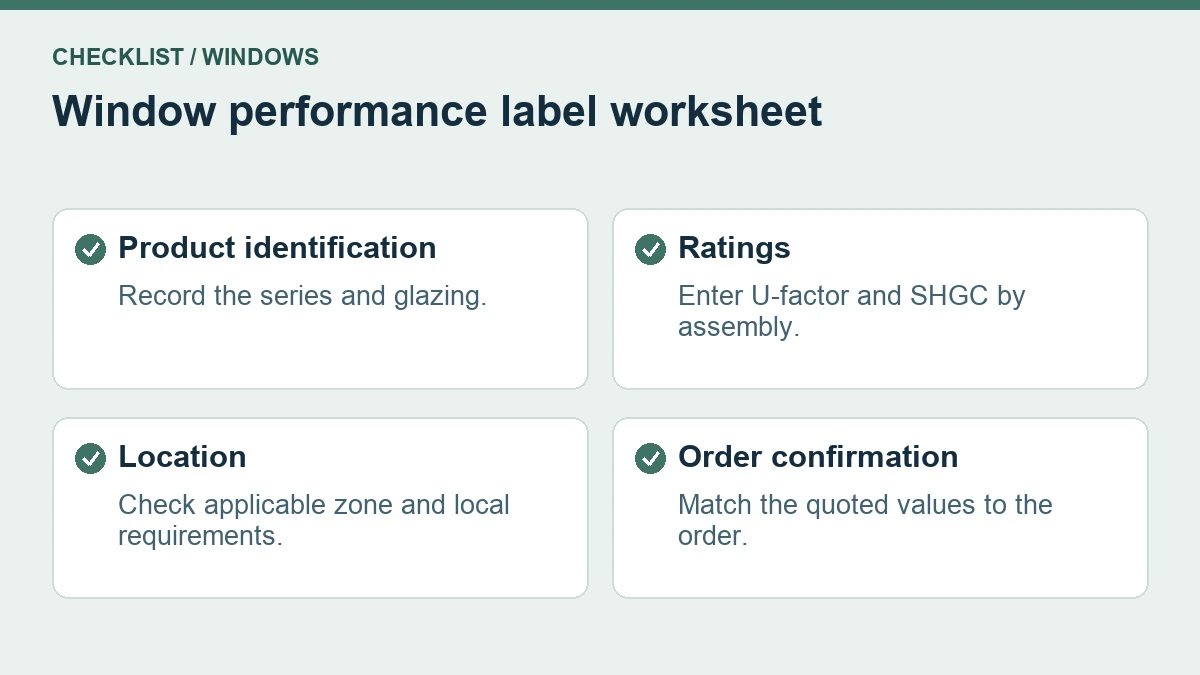
- Product identification — Record the series and glazing.
- Ratings — Enter U-factor and SHGC by assembly.
- Location — Check applicable zone and local requirements.
- Order confirmation — Match the quoted values to the order.
Sources and scope notes
We distinguish published references from worked scenarios, which are not verified contractor bids. Review product instructions and local requirements for your own project.
- ENERGY STAR residential windowsProduct ratings and location-based certification guidance.
- ENERGY STAR window criteriaCertification criteria for different climate zones.
- California Energy Commission climate zonesAddress and location information for the applicable climate zone.