What Bathroom Demolition Can Reveal Behind Tile
Plan for a review after finishes come off. Document the affected area and find the cause before committing to the price or covering the wall again.

What matters most
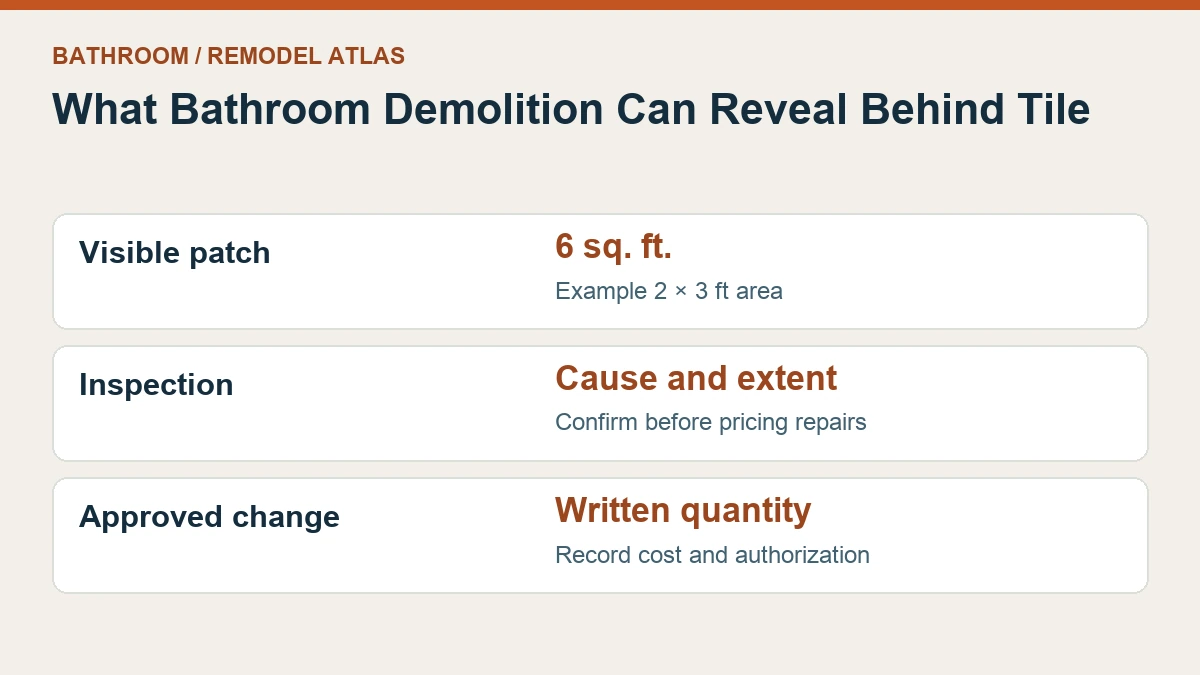
- Visible patch — 6 sq. ft. (example 2 × 3 ft area).
- Inspection — Cause and extent (confirm before pricing repairs).
- Approved change — Written quantity (record cost and authorization).
Give the demolition bid a boundary
List demolition items and include waste handling, protection and reinstatement. Ask the estimator where visual access ends. If there are concerns about lead paint, suspect asbestos-containing materials or significant mold, bring in qualified guidance before disturbing them. EPA’s renovation and asbestos guidance explains the relevant starting points.
EPA lead-safe renovation guidance · Federal program information for homeowners and renovators.
Separate discovery from quantity
A hypothetical opened wall may reveal a damp 2 × 3 ft patch, or 6 sq. ft. Record its location and identify the source before pricing restoration. The visible patch may not represent the full affected area. Ask for photos and a separate description of the underlying pipe, substrate or framing conditions.
| Line item | Value | Basis |
|---|---|---|
| Visible patch | 6 sq. ft. | Example 2 × 3 ft area |
| Inspection | Cause and extent | Confirm before pricing repairs |
| Approved change | Written quantity | Record cost and authorization |
Replace an open-ended allowance with a written change
Request a defined quantity, the repair method, who performs it and which finish work will follow. If prices depend on discovering more damage, record a unit basis and a decision point. A floor repair can affect the tile installation quantities and the schedule for closing the floor.
EPA homeowner asbestos guidance · How to handle questions about suspect materials before renovation.
Change-order and conditions log
Get a print-ready planning worksheet by email. We use your name and email to fulfill your request, not to sign you up for marketing.
Make the close-up review part of the schedule
Identify who documents the repair and verifies that the cause has been addressed before covering it. Ask how the extra work affects inspection timing, dry-out or cure time and the finish scope. Record each change with its cost, evidence and approval.
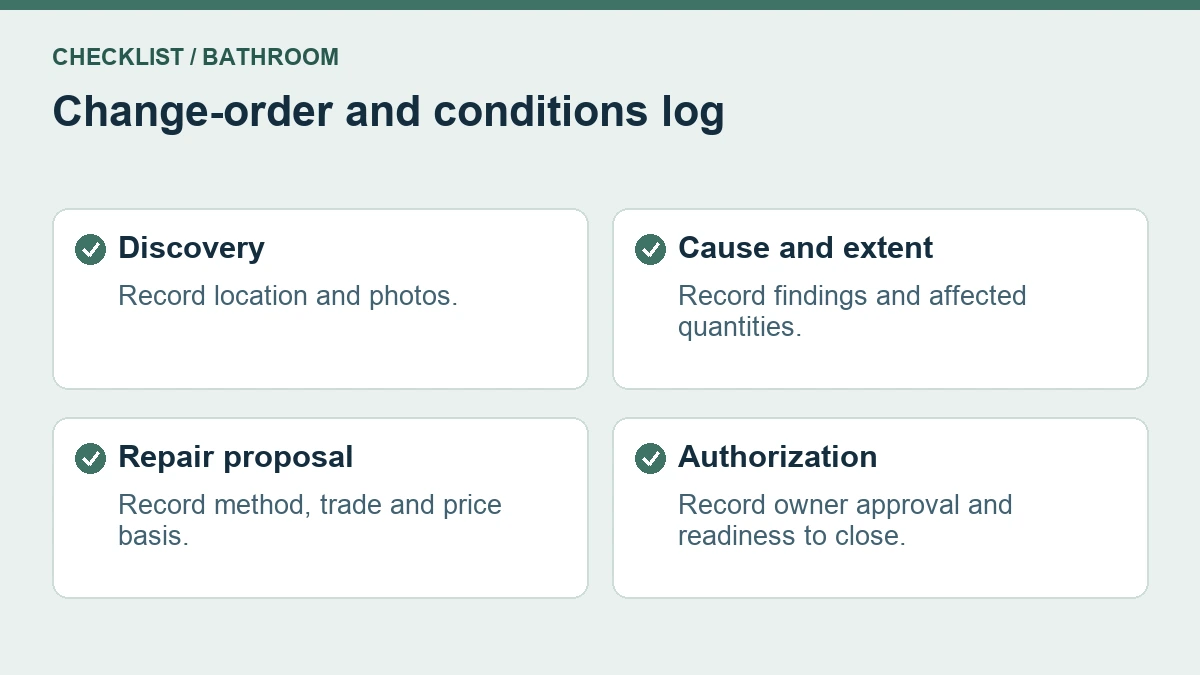
- Discovery — Record location and photos.
- Cause and extent — Record findings and affected quantities.
- Repair proposal — Record method, trade and price basis.
- Authorization — Record owner approval and readiness to close.
Sources and scope notes
We distinguish published references from worked scenarios, which are not verified contractor bids. Review product instructions and local requirements for your own project.
- EPA lead-safe renovation guidanceFederal program information for homeowners and renovators.
- EPA homeowner asbestos guidanceHow to handle questions about suspect materials before renovation.
- FTC home improvement hiring guidanceGuidance on written estimates, hiring and contracts.