
Insert vs. Full-Frame Window Replacement
Decide whether an existing frame can stay and compare exactly what comes out, what goes in and what gets finished.
What matters most
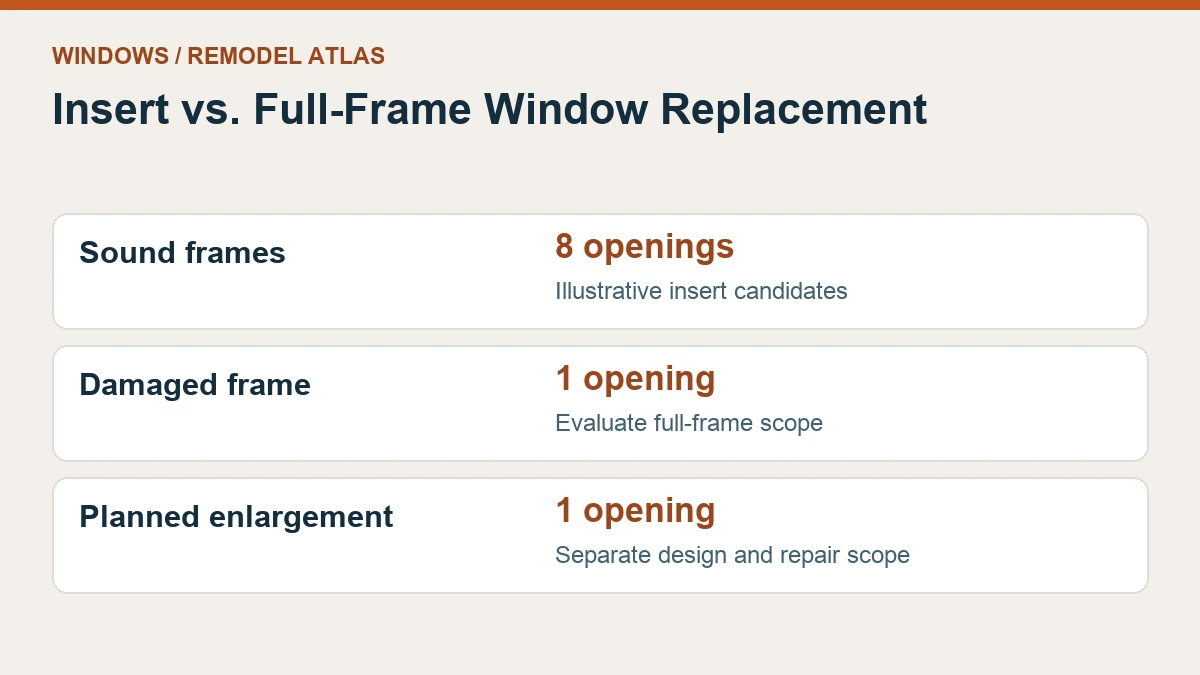
- Sound frames — 8 openings (illustrative insert candidates).
- Damaged frame — 1 opening (evaluate full-frame scope).
- Planned enlargement — 1 opening (separate design and repair scope).
Inspect the existing opening first
Have the installer inspect the sill, frame, surrounding finishes and signs of water entry. Insert replacement can retain a suitable frame while replacing the sash assembly with a new unit. Ask how the fit will affect the clear opening and how gaps around the insert will be sealed.
Review the work added by a full-frame installation
Full-frame work removes the existing frame and can expose the rough opening and wall interface. Ask how the contractor will integrate the opening with the drainage plane, seal the perimeter and restore affected trim. Record the finish materials on both sides of the wall.
| Line item | Value | Basis |
|---|---|---|
| Sound frames | 8 openings | Illustrative insert candidates |
| Damaged frame | 1 opening | Evaluate full-frame scope |
| Planned enlargement | 1 opening | Separate design and repair scope |
Split a mixed job into three price groups
For ten openings, eight sound frames may qualify for inserts, while one damaged frame and one planned enlargement need separate scopes. Tag them individually. Use the changed window opening guide before pricing an enlargement together with a standard replacement.
Frame condition and installation worksheet
Get a print-ready planning worksheet by email. We use your name and email to fulfill your request, not to sign you up for marketing.
Ask for the decision and discovery terms in writing
Have the installer explain what evidence supports their method for each opening. Request a written price and description for discoveries after removal. Where the inspection suggests decay or ongoing leaks, clarify what investigation and repairs must happen before the new unit is installed.
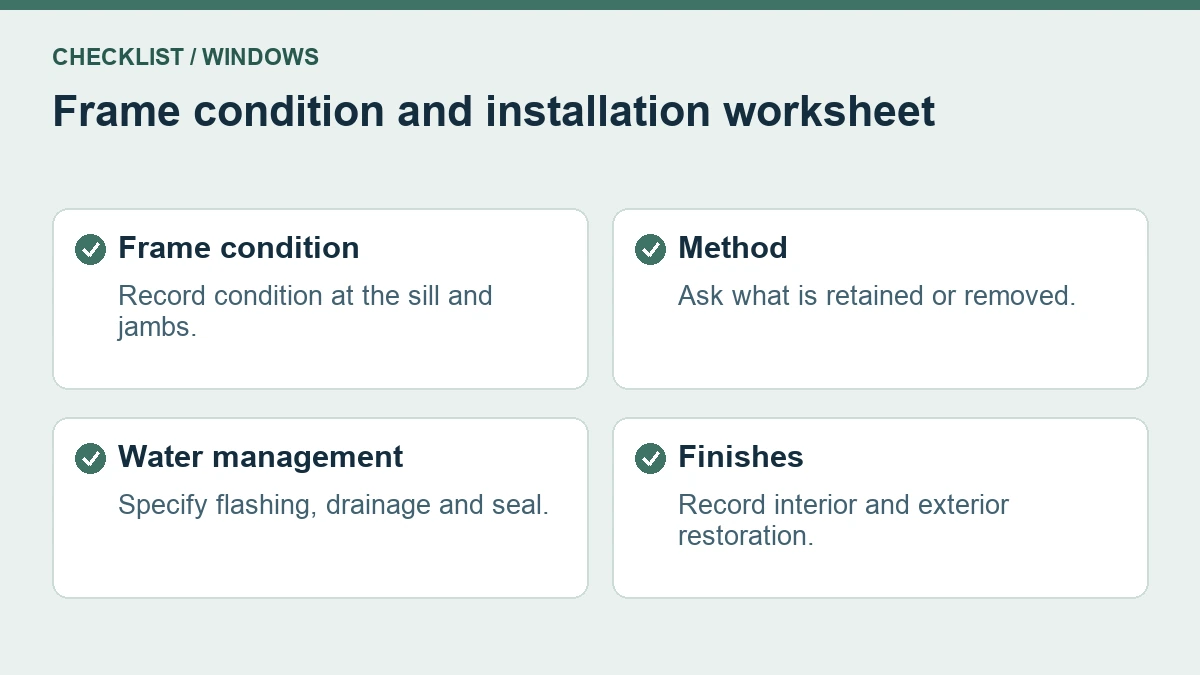
- Frame condition — Record condition at the sill and jambs.
- Method — Ask what is retained or removed.
- Water management — Specify flashing, drainage and seal.
- Finishes — Record interior and exterior restoration.
Sources and scope notes
We distinguish published references from worked scenarios, which are not verified contractor bids. Review product instructions and local requirements for your own project.
- PNNL window replacement checklistInsert and full-frame scopes, finish details and installation checks.
- HomeGuide window replacement costPublished product and installation prices for different scopes.
- FTC home improvement hiring guidanceGuidance on written estimates, hiring and contracts.