
Window Flashing and Air Sealing Scope
Ask for the water-management, air-sealing and finish work around each replacement window before comparing prices.

What matters most
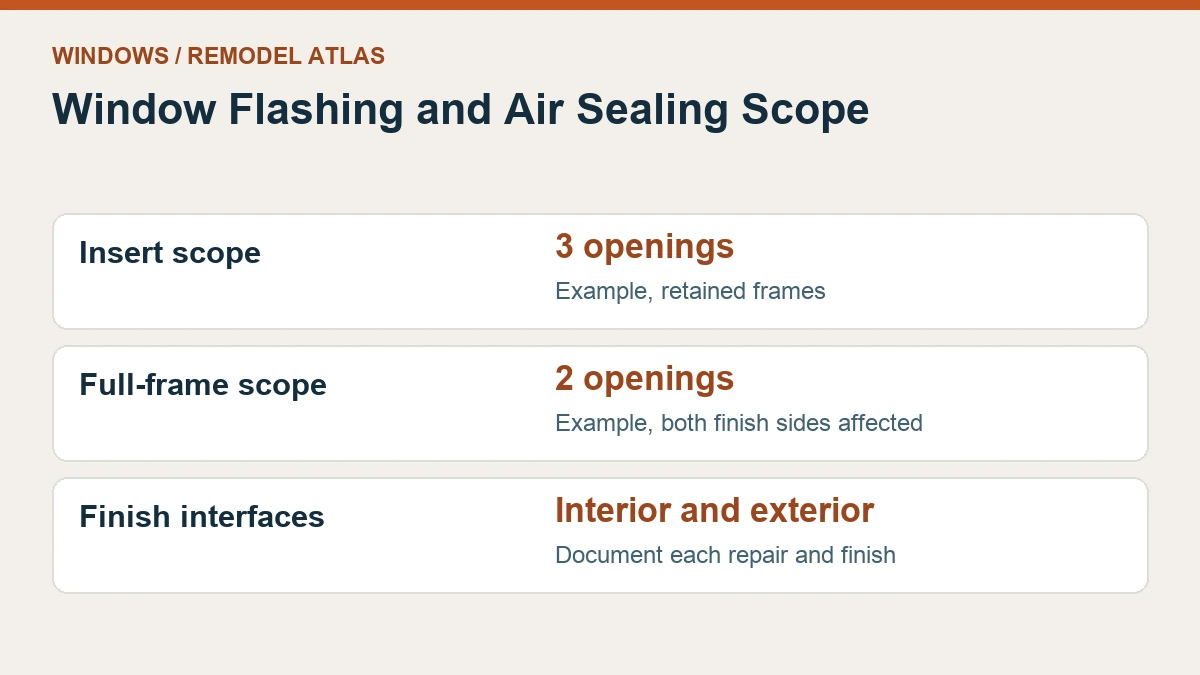
- Insert scope — 3 openings (example, retained frames).
- Full-frame scope — 2 openings (example, both finish sides affected).
- Finish interfaces — Interior and exterior (document each repair and finish).
Identify what the installation disturbs
A full-frame replacement can expose the opening and the interface to siding, masonry or stucco. Have the installer explain which materials will be removed or retained. In an insert job, ask how the retained frame was evaluated and how suspected leaks will be investigated.
Put the planned tasks in the quote
Ask for the flashing, drainage-plane connection and perimeter air sealing specified for the chosen installation. Request the manufacturer’s instructions where available. Describe exterior restoration such as siding or stucco separately from interior casing, drywall and paint, so labor and materials are visible.
| Line item | Value | Basis |
|---|---|---|
| Insert scope | 3 openings | Example, retained frames |
| Full-frame scope | 2 openings | Example, both finish sides affected |
| Finish interfaces | Interior and exterior | Document each repair and finish |
Document the openings with more finish work
In an example of five replacements, three sound frames could retain trim while two full-frame jobs require work on both sides of the wall. Mark each on the schedule. Use the full-frame comparison to classify what will be removed before signing off on the materials.
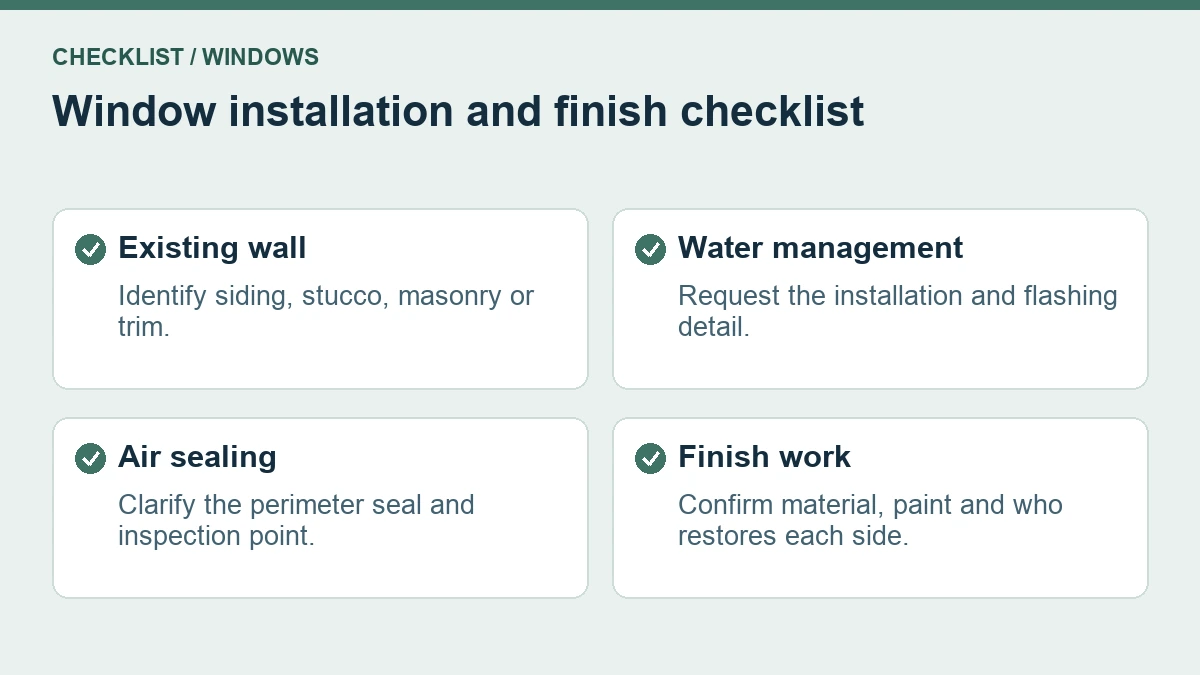
Window installation and finish checklist
Get a print-ready planning worksheet by email. We use your name and email to fulfill your request, not to sign you up for marketing.
Ask for a check before the work is covered
Agree on which details can be photographed during installation. Ask how openings are protected if work stops before they are enclosed. Confirm which wall repairs need approval, who completes them and how the written warranty handles installation concerns.
- Existing wall — Identify siding, stucco, masonry or trim.
- Water management — Request the installation and flashing detail.
- Air sealing — Clarify the perimeter seal and inspection point.
- Finish work — Confirm material, paint and who restores each side.
Sources and scope notes
We distinguish published references from worked scenarios, which are not verified contractor bids. Review product instructions and local requirements for your own project.
- PNNL window replacement checklistInsert and full-frame scopes, finish details and installation checks.
- FTC home improvement hiring guidanceGuidance on written estimates, hiring and contracts.
- HomeGuide window replacement costPublished product and installation prices for different scopes.